The lodge sits in protected primary forest where logging is forbidden. These are the practices that keep it that way, and how you can help during your stay.
The lodge draws its water from a natural spring, stores it in tanks and pumps it to the cabins. Wastewater from bathrooms and kitchen goes through an infiltration system.
Light
A generator runs from 18:30 to 22:30 for the shared areas. Outside those hours, light comes from candles and your headlamp.
Waste
Organic waste goes to a compost system at the lodge. Inorganic waste goes back to Rurrenabaque by boat to be recycled.
Capacity
No more than 18 guests at a time, so the service stays personal and the impact on the forest stays low.
Construction
Wood, stone and palm leaves, all natural and chosen so that building the lodge did not damage the forest around it.
Trails
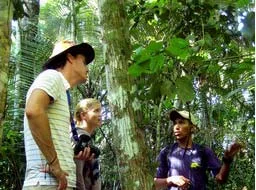
A 40 km trail network designed to show the forest with the least disturbance. Trails are walked only with a local guide.
Wildlife
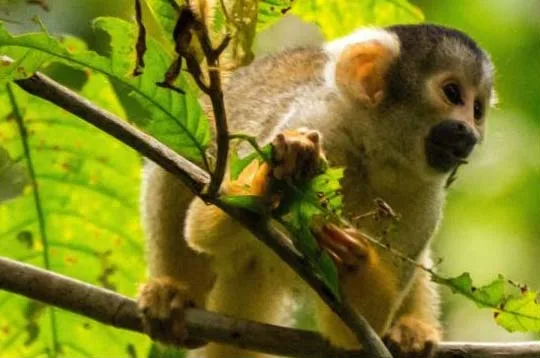
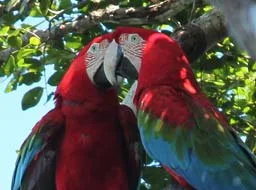
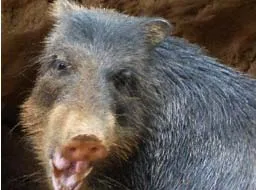
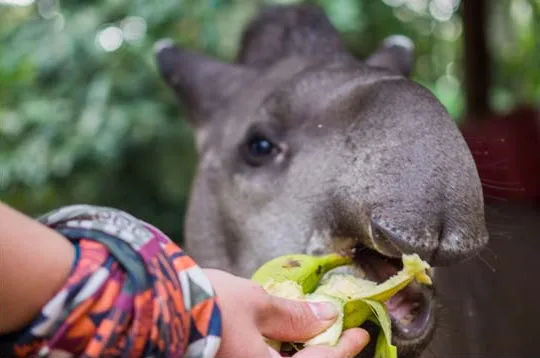
Animals are watched from a distance, quietly, and never fed: feeding them changes their behavior and can pass on human diseases.
Connection
There is no wifi or phone signal. The lodge stays in contact with Rurrenabaque by radio.
Ownership
Madidi Jungle is run and managed entirely by indigenous families from San José de Uchupiamonas.
Your part
How you can help
Before you travel
Choose the most direct route; take-offs and landings use the most fuel
Pack light: waste is hard to manage in remote places
Read about the local cultures and learn a few words
Ask us what useful gifts you can bring for the community or the school
During your stay
Use water carefully, it is a limited resource
Keep your distance from animals and never feed them
Ask before you photograph people
Buy local products, so your money stays in the region
Avoid products made from feathers, furs or bones
After you return
Tell us and your travel agency how we can reduce our impact further
If you promised photos or gifts to someone, remember to send them
Tell us your dates and how many you are
We reply with availability, the program that fits your days and the total price. Departures every day from Rurrenabaque, minimum two travelers.
Madidi Jungle Ecolodge is a low-impact rainforest eco-venture created and run by indigenous people who live in the heart of Madidi National Park. We opened to visitors in 2011 on community lands of San José de Uchupiamonas.